Why Consistent Colour-Coding Makes Phonics Stick
What if the secret to making phonics “stick” in children’s minds isn’t just what you teach — but how you help them remember it?
In Remember: The Science of Memory and the Art of Forgetting, neuroscientist Lisa Genova explains that memory begins with attention. It’s the “save button” in our brain — without it, nothing is stored for later. Attention is the gateway to deeper learning, and without it, even the best-taught lesson can fade away.
Genova also points out that our memories are not stored in a single place. They are scattered across different networks in the brain, linked together through the connections we make during learning. The more ways we encode new information — through sight, sound, meaning, and emotional connection — the more likely it is to “stick”.
This is where Monster Phonics thrives.
The Monster Phonics Approach
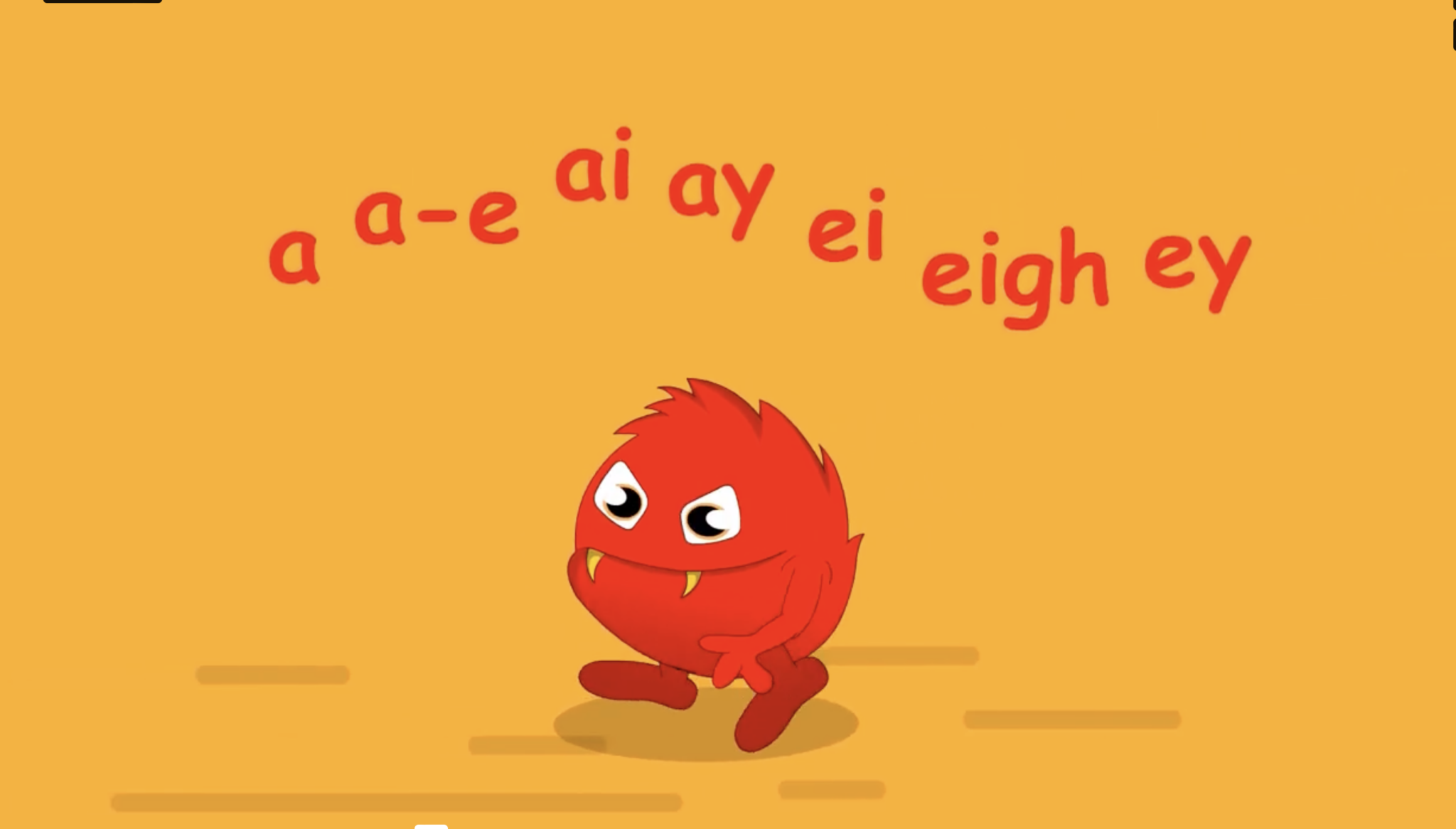
Monster Phonics is an enhanced systematic synthetic phonics scheme. It teaches phonics in a comprehensive, structured progression — meeting all the rigour expected of a DfE-validated programme — but also provides additional multi-sensory support to make learning more memorable and engaging.
It uses consistent colour coding and monster sound cues to support children when they encounter long vowels, silent letters, and tricky letters — the areas that often cause the most confusion. This extra support is applied consistently and then phased out over time, so children become confident, independent readers without relying on prompts.
And it’s not just about the colours. The monsters themselves each represent a sound, bringing phonics to life. This combination of colour, character, sound, and story doesn’t just create excitement in the classroom — it accelerates the learning process for everyone.
How Memory Science Supports This Approach
Lisa Genova’s work reminds us that attention and engagement are the first steps towards creating a memory. If something is engaging enough to capture a child’s focus, it’s far more likely to be encoded in the brain.
But attention is just the starting point. For a memory to last, it needs:
-
Multiple connections – The more sensory channels and emotional hooks used in teaching, the stronger the memory network becomes. Monster Phonics builds this in naturally through colour, character, sound, and story.
-
Meaningful associations – When a grapheme is linked to a friendly monster and a consistent colour, it’s no longer an abstract shape; it becomes something children recognise and understand.
-
Repetition and reinforcement – Consistent use of cues helps the brain automate recognition, while the gradual removal of support strengthens independent recall.
This aligns with findings from reading experts like Maryanne Wolf (Proust and the Squid), who emphasises that the brain learns to read by forming and strengthening complex neural pathways — and that multisensory learning accelerates this process.
Making the Hard Parts Easier
Long vowel sounds, tricky letters, and silent letters are often stumbling blocks in early reading. Monster Phonics turns them into stepping stones by providing children with memorable, consistent cues that activate attention, deepen encoding, and build retrieval strength.
When a child encounters Silent Letters represented by the Silent Monsters, or the “ee” sound linked to Green Froggy, they are drawing not only on visual recognition but also on story-based emotional connection — both powerful levers in memory formation.
A Moment That Says It All
I was in a school just last week where this played out perfectly. A child came across the “ea” grapheme in a new word — something they hadn’t seen for a while. Without hesitation, they said, “That’s Green Froggy!” and read the word correctly.
It was a moment that summed up exactly why Monster Phonics works. The consistent colour and character connection meant the sound was instantly recognised — no sounding out, no guesswork, just a confident, automatic response. That’s the power of making learning memorable.
From Attention to Independence
Ultimately, Monster Phonics is designed to capture attention, build engagement, and embed learning so deeply that children can later recall sounds and words without prompts. It’s a balance of rigour (a set, structured progression) and enhancement (colour, character, and story), ensuring children are not just learning phonics — they are remembering it, retrieving it, and applying it.
Learn more about Remember by Lisa Genova
And if you are ready to see how Monster Phonics works in your school? Start your free trial today and discover how our enhanced phonics programme can make learning memorable for every child. Click here
Prefer to speak with someone? Feel free to reach out to our team to find out how Monster Phonics could work for your school.