The memory palace, or Method of Loci, is a fascinating memorisation technique that taps into the brain’s natural ability to recall locations and vivid imagery. Even Sherlock Holmes uses a mind palace to solve complex cases in modern adaptations — and the idea can work wonders in the classroom too.
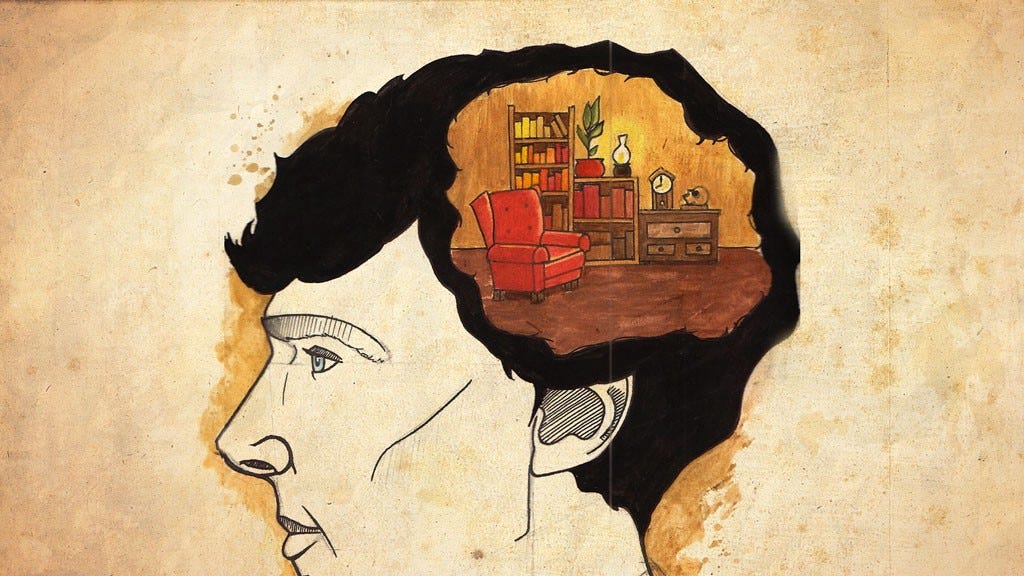
For KS2 teachers, this method can be adapted to help children remember tricky spellings and make learning both visual and fun.
How the Memory Palace Works
Here’s a simple way to explain it to children:
Choose a Familiar Place
Ask them to pick somewhere they know well — perhaps their home, a classroom, or even their local park. This becomes their memory palace.
Visualise Moving Through It
Encourage them to imagine walking through this space, noticing the rooms or key landmarks.
Place Information in Each Room
For each part of the word, create a vivid mental image and “place” it somewhere inside the palace.
Revisit for Recall
When they need to remember the word, they can mentally walk back through the palace, finding each image along the way.
Let’s break down category into smaller chunks — cat, e, gor, y.
cat: In the living room, they imagine a huge cat lounging on the sofa.
e: In the hallway, a giant lowercase e stands proudly by the door.
gor: In the kitchen, a friendly gorilla rummages through the fridge.
y: In the garden, a yellow y swings happily from a tree.
When the child needs to spell category, they simply walk through their memory palace — cat, e, gorilla, y — reconstructing the word with ease.
The memory palace works because the brain is wired to remember spatial and visual information more effectively than abstract concepts.
By associating each part of a word with vivid, visual images in familiar spaces, children create multiple memory pathways.
This method activates the hippocampus, the part of the brain responsible for memory and spatial navigation — making recall faster, stronger, and more durable.
When we teach spelling, we’re really teaching something bigger: how to remember.
Techniques like the memory palace give children the tools to learn anything — not just this week’s spelling list.
We built Superhero Spelling using the latest research on neuroscience and memory.
Every half term, we introduce a way of learning that helps every child — not just with the weekly words, but with all learning.
Little techniques that build a lifelong toolkit for remembering, understanding, and succeeding.
Check it out 👉 www.superherospelling.com