“Set your course by the stars, not by the lights of every passing ship.”
That line came to mind almost straight away when we first read the Welsh Government’s new Principles for Teaching Language and Literacy in Wales.
Read here:
https://www.gov.wales/principles-teaching-language-and-literacy-wales-html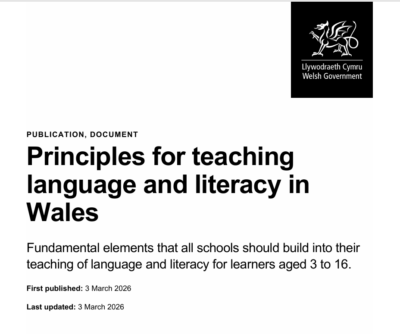
In education it is very easy to be pulled in different directions. New ideas appear, debates get louder, and approaches seem to shift with the tide. Yet most educators know, deep down, that good teaching rests on a few enduring principles. When it comes to early reading, those principles are becoming clearer and clearer.
This new Welsh document quietly reinforces many of them.
One of the most important is the recognition that literacy teaching should be systematic, structured and explicit, ensuring that learners can decode unfamiliar words through phonics. The document states clearly that learners should be able to “decode unknown words effectively through the systematic, structured and explicit teaching of phonics.”
That clarity is genuinely welcome. The research base for systematic synthetic phonics is now extremely strong, and it is encouraging to see this reflected so clearly in national guidance.
But the document also makes another point that feels just as important.
It places the experience of the learner firmly at the centre of literacy teaching. The principles talk about enjoyment, success and motivation as essential elements of effective practice. In other words, rigour alone is not enough. Children also need to feel engaged and confident if reading is really going to take hold.
For us, that balance has always mattered.
Some traditional phonics programmes have certainly delivered structure and rigour, but sometimes with less attention to how the learning actually feels for the child. Lessons can become quite template driven, with limited thought given to the learner’s journey through the programme.
Yet engagement is not a superficial extra. It plays a central role in learning. When children feel successful, when they are curious about what comes next, and when the learning environment feels coherent and meaningful, progress tends to accelerate.
That belief is why we have always tried to combine the proven strengths of systematic phonics with a strong focus on the learner’s experience. It is why we include hooks within lessons, use songs and animation, and created a coherent, slightly quirky world that children enjoy stepping into. For many learners, these elements give them something to hang on to as they build their understanding.
The Welsh Government principles also highlight something else that matters enormously: people.
The document places a strong emphasis on professional learning and teacher development. That feels absolutely right. Even the best resources will only succeed if teachers are confident, supported and continually developing their practice. High quality CPD is not an optional extra in literacy improvement. It is fundamental.
Taken together, the document affirms some very important things. It makes it clear that early reading needs systematic, structured and explicit phonics, while also recognising that engagement, enjoyment and success sit right at the heart of effective literacy teaching.
That balance matters. Rigour and engagement are not competing ideas. They are simply two parts of the same goal: helping every child become a confident reader.
For us, that balance has always been central to Monster Phonics. To borrow another sky analogy, we believe we all live under the same sky. Every learner is a star in that vast firmament, and their experience of learning really does matter. Rigour in phonics is essential, but so too is the curiosity, enjoyment and sense of belonging that help children stay on the journey.